100 Things to Know About Fotona Laser Treatments in Encino, CA
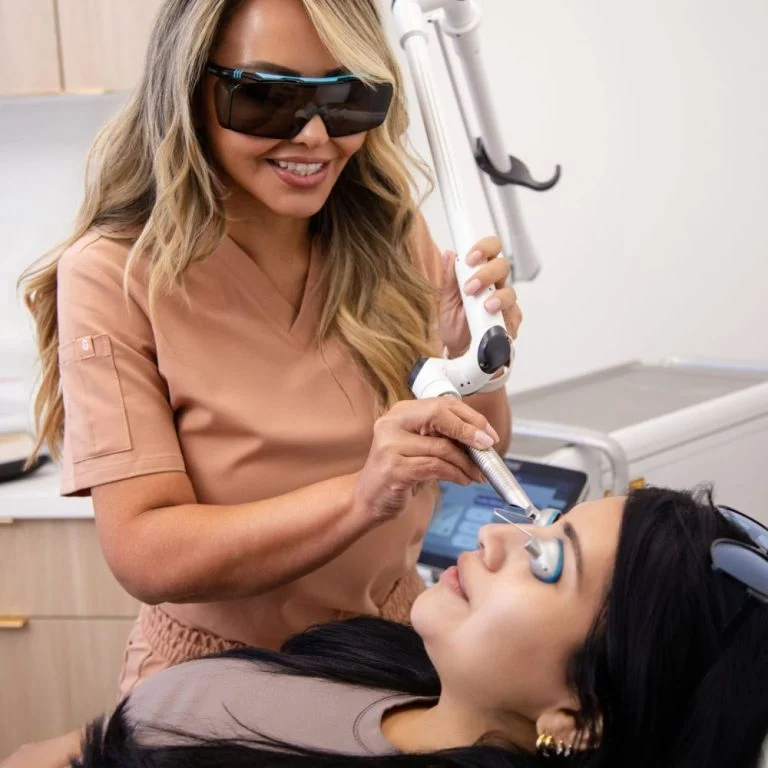
When patients ask about Fotona, they are rarely asking one simple question. They usually want to know whether it hurts, whether it helps acne scars, whether it tightens skin, whether it is safer for deeper skin tones, whether there is downtime, and whether the price matches the result. By the time a good consultation ends, most people have picked up close to a hundred useful facts, some small, some decisive.
That is the right way to think about Fotona laser treatments. It is not one treatment with one purpose. It is a platform used in several ways, often with different wavelengths, pulse settings, and treatment goals. In practices around Encino, the interest tends to cluster around familiar concerns: texture changes after acne, sun damage, fine lines around the mouth and eyes, redness, laxity along the jawline, uneven tone, and a general desire to look more rested without disappearing for two weeks.
If you are researching Fotona Laser Treatments Encino, CA, the first thing to understand is that the name tells you the technology family, not the full treatment plan. That distinction matters because the same brand may be used very gently for light resurfacing or much more aggressively for collagen remodeling and scar work.
What Fotona actually means in a treatment room
Fotona systems are known for using laser wavelengths commonly associated with resurfacing and deeper tissue heating. In practical terms, that means a provider can treat the skin surface, deeper layers, or both in sequence. Patients often hear terms like Er:YAG and Nd:YAG during consultation. Those are not marketing phrases. They describe different laser interactions with tissue.
Er:YAG is usually the wavelength that enters the resurfacing conversation. It is often used when someone wants help with texture, fine wrinkles, enlarged pores, and certain acne scars. It can remove or heat very superficial layers with precision, and it can be adjusted from lighter polishing to more intensive resurfacing depending on the treatment objective.
Nd:YAG often comes up when the goal involves deeper heating, vascular issues, collagen stimulation, or nonablative tightening. In many offices, the appeal of Fotona is the ability to combine both approaches in one broader strategy rather than forcing every patient into the same one-size plan.
That flexibility is a strength, but it also explains why online research feels confusing. One person describes a lunchtime treatment with mild pinkness. Another describes peeling for several days. Both may be talking about a Fotona session, but not the same one.
Why Encino patients tend to ask for it
Encino has a patient population that pays attention to sun exposure, camera-ready skin, and realistic downtime. That shapes demand. People are not only asking, “Can this improve my skin?” They are asking, “Can this improve my skin enough to justify time off, healing, and cost?”
That matters because laser decisions are practical. A school administrator may be comfortable with a weekend of redness but not a full week of visible peeling. A realtor may want skin tightening around the lower face but cannot risk bruising or obvious post-treatment crusting before several client meetings. A parent may want acne scar revision, but only if the plan works around carpools and work calls.
Fotona often enters these conversations because it can be customized across a spectrum. Some settings aim for freshening and collagen stimulation with modest disruption. Others are intentionally stronger because meaningful scar revision or wrinkle improvement usually requires more than a very light pass.
The first ten things most people should know
The easiest mistake is assuming every laser concern needs the strongest treatment. It does not. Fine crepiness under the eyes, for example, may respond to a different strategy than deep rolling acne scars on the cheeks. A good practitioner matches the endpoint to the issue.
Another common misunderstanding is that “non-surgical” means no recovery. Many Fotona treatments are easier than surgery, but skin still needs time to calm down. If your treatment includes resurfacing, expect your face to look treated.
Patients also tend to underestimate the cumulative effect of a series. One session can help, but several moderate sessions often outperform one aggressive session for people who want gradual improvement with less disruption.
Then there is the matter of skin quality versus skin shape. Lasers can improve texture, pigment irregularity, and some laxity. They do not replace surgery when loose tissue is the main problem. This point saves people a lot of disappointment.
The fifth practical point is that age alone is a poor guide. I have seen patients in their early thirties with significant acne scarring who need more intensive work than patients in their fifties seeking brightening and fine-line softening. The skin concern, not the birthday, should guide treatment.
A sixth point, often learned the hard way, is that sun habits after treatment influence how much you enjoy your result. California sun is not forgiving. If you spend the week after resurfacing at outdoor brunches and afternoon walks without good protection, you are undercutting your investment.
Seventh, comfort varies. Some Fotona sessions are very tolerable with topical numbing. Others may call for stronger comfort measures, cold air, nerve blocks, or a longer numbing period. Pain stories online are often incomplete because they leave out how the practice handled comfort.
Eighth, pigment history matters. Anyone with melasma, post-inflammatory hyperpigmentation, or a tendency to scar needs a more cautious, individualized plan. Laser can still be appropriate, but not on autopilot.
Ninth, realistic photography is important. Results can be subtle in the best way. Better skin often reads as smoother makeup application, less redness at the end of the day, or a softer look around the mouth, not a dramatic overnight transformation.
Tenth, provider judgment is not an accessory. It is the treatment. The machine matters, but decisions about settings, depth, spacing, skin prep, and aftercare are what separate a smooth course from a complicated one.
What concerns Fotona is often used to address
The most common indications in facial aesthetics include textural roughness, fine lines, enlarged pores, acne scars, superficial pigment irregularities, redness, and mild to moderate skin laxity. Some offices also use Fotona-based protocols around the eyes and mouth, two areas where early aging tends to show up first.
Acne scar work deserves special mention because it is one of the areas where expectations need the most careful framing. Scars vary. Ice-pick scars, boxcar scars, and rolling scars do not behave the same way, and the best plan may combine laser with subcision, peels, microneedling, or filler. Fotona Laser Treatments Encino, CA Patients who think one laser pass will erase years of scarring are usually disappointed. Patients who understand that scar revision is a process are often much happier, especially when baseline photos make the incremental gains visible.
For tightening, Fotona is usually best for people with early or moderate laxity rather than heavy jowling or neck banding. There is a sweet spot: the patient who notices softening of contour or a slightly tired lower face, but is not yet a surgical candidate or is simply not interested in surgery.
Resurfacing patients are another distinct group. They often care most about overall polish. They may not have one dramatic complaint, but they dislike the combination of dullness, etched lines, old acne marks, and roughness that makes the skin look older than it is.
What treatment day really feels like
The rhythm of the appointment depends on the protocol. Many practices begin with photography, cleansing, and a numbing phase if resurfacing is planned. During treatment, patients often describe heat, sharp snaps, or a prickly sensation. Deeper or more ablative settings can feel intense in certain areas, especially around the mouth, nose, and forehead.
Right after treatment, nonablative sessions may leave the skin warm and pink, almost like a brisk hike in dry weather. Stronger resurfacing can produce more obvious redness, swelling, and a sandpapery texture. By the next day, some patients look merely flushed. Others look as though they had a significant peel. Neither response is automatically a problem. It depends on what was done.
I tell patients to judge the recovery by function as much as appearance. Can you work from home? Usually yes. Do you want to attend a close-up social event two days later? That depends heavily on the intensity. For a light tightening session, maybe. For meaningful resurfacing, probably not.
The part no one should skip, consultation quality
A proper consultation is not just about candidacy. It is about matching goals, risk tolerance, and downtime tolerance. The best consultations spend time on your history of cold sores, melasma, keloids, isotretinoin use, recent tanning, autoimmune issues, prior lasers, and how your skin reacts to irritation.
They also clarify the real target. Sometimes a patient says “pigment,” but the dominant issue is vascular redness. Sometimes someone asks for tightening, but what bothers them most is actually etched creasing around the lips. When the concern is named precisely, treatment choices improve.
The provider should also explain what can make results slower or less dramatic. Smoking, poor wound healing, chronic inflammation from untreated rosacea, and inconsistent skincare all affect the trajectory. These details are not glamorous, but they are central.
Skin tone, pigment risk, and why nuance matters
One of the more important realities in laser medicine is that skin tone changes the conversation. It does not simply disqualify someone from treatment, but it changes settings, preparation, timing, and device choice. Deeper skin tones and anyone prone to post-inflammatory hyperpigmentation need a conservative mindset and a practitioner who is comfortable treating a wide range of complexions.
This is where online before-and-after galleries can mislead. A result that looks straightforward on very fair skin may require a different plan, longer pretreatment, and gentler staging for someone with more pigment in the skin. The treatment may still be worthwhile, but the path is less casual.
In Southern California, recent sun exposure complicates matters further. A patient who says, “I am not tan,” may still have more active pigment than they realize from routine outdoor time. That is one reason many experienced practices ask detailed questions about travel, hiking, tennis, and daily SPF habits before scheduling resurfacing.
Downtime is not one thing
Patients often ask for “the downtime” as if there were a single answer. In truth, downtime has at least four parts: visible redness, swelling, surface roughness or peeling, and social downtime, meaning how comfortable you feel being seen.
For a lighter collagen-stimulating treatment, visible recovery might be brief, sometimes measured in a day or two of pinkness. For a resurfacing treatment intended to change texture more meaningfully, visible recovery may run several days and occasionally longer. Makeup timing also varies. Some people can return to tinted mineral products fairly quickly after certain sessions, while others need to wait until the skin barrier settles.
This is where practical planning pays off. If you have a wedding, corporate headshots, or a school fundraiser, do not schedule stronger resurfacing right before it just because there is a Friday opening.
Results, timelines, and the patience problem
People often expect laser results to behave like injectable results, where the change is either immediate or visible within days. Fotona treatments, especially those designed for collagen remodeling, tend to unfold more gradually. Surface changes can show up first. Tightening and textural refinement often continue over weeks to a few months.
Scar improvement is the classic patience test. An acne scar patient may notice the skin looks brighter and smoother after one session, then wonder whether the actual depressions changed enough. Usually, scar improvement becomes easier to appreciate over a series, especially under consistent lighting and photography.
Good practices do not promise perfection. They talk about percentage improvement, maintenance, and the possibility of combination therapy. That is not hedging. It is honesty.
A short checklist before you book
- Ask which specific Fotona treatment or protocol is being recommended for your concern.
- Ask what the provider expects one session to accomplish versus a full series.
- Ask how your skin tone and pigment history affect settings and risk.
- Ask what you will look like on day one, day three, and day seven.
- Ask who handles complications or urgent questions after treatment.
Those five questions reveal a lot. A confident, experienced office can answer them clearly without sounding rehearsed.
Cost, value, and why price-shopping often backfires
Prices in Encino can vary widely, and that variation does not always map neatly to quality. Cost may reflect treatment intensity, provider expertise, whether numbing and aftercare are included, how much time is booked, and whether you are seeing a physician or a delegated laser specialist.
The cheapest quote can be expensive if the treatment is too mild to produce a meaningful result and you end up repeating it several times out of frustration. On the other hand, the most expensive quote is not automatically the best. The right question is whether the plan is coherent for your skin and whether the provider can explain the expected endpoint.
I have seen patients save money by choosing a clinic that understood when not to laser. Someone with active hormonal breakouts may need acne control before scar resurfacing. Someone with melasma may need topical management first. Starting laser at the wrong time can waste both budget and healing time.
How aftercare shapes the final outcome
Aftercare is rarely glamorous, but it often determines whether the healing phase feels smooth or miserable. Skin that has been resurfaced wants calm, moisture, and protection. Over-cleansing, active acids, harsh scrubs, and impulsive picking are the usual mistakes.
The first several days are mostly about supporting the barrier. That may mean bland moisturizers, strict sun avoidance, and following the office protocol exactly rather than experimenting with whatever is trending online. Once the surface settles, skincare can be layered back in more strategically.
Patients are often surprised by how long the skin can remain a bit pink or reactive even after the obvious healing ends. That lingering sensitivity is normal in many cases and is one reason experienced providers reintroduce actives thoughtfully instead of all at once.
The five aftercare habits that matter most
- Keep the skin moisturized with the products your provider recommends.
- Avoid direct sun and use diligent broad-spectrum protection once allowed.
- Pause strong actives until the skin barrier has clearly recovered.
- Do not pick flaking skin or scrub away rough texture.
- Report unusual pain, oozing, or worsening redness promptly.
Simple, consistent aftercare tends to beat complicated routines every time.
Common myths that deserve to die
One stubborn myth is that stronger always means better. In reality, overtreating can increase risk without proportionate benefit, especially in patients prone to pigment changes. Precision beats bravado.
Another myth is that one laser can solve every aesthetic concern. Lasers are powerful tools, but they are not substitutes for volume restoration, surgery, neuromodulators, or disciplined skincare when those are the real need.
There is also the myth that downtime equals efficacy. Some of the most effective collagen-stimulating work is not dramatic to watch during recovery. Conversely, looking very red and raw is not proof of a superior treatment.
A final myth worth mentioning is that all providers using the same brand deliver equivalent results. omniawellnesscenterencino.com Fotona Laser Treatments Encino, CA They do not. Settings, sequencing, patient selection, and restraint all matter.
How to judge whether you are a good candidate
The best candidates are usually healthy patients with a specific, understandable concern and a realistic tolerance for healing. They are willing to protect their skin from sun, follow instructions, and think in terms of improvement rather than erasure.
A poor candidate is not just someone with a contraindication. It is also someone who wants surgery-level tightening from a non-surgical treatment, someone who cannot avoid sun right after resurfacing, or someone with an important event too close to the treatment date.
Candidacy can also change with timing. The same patient who is not a good candidate in August after beach weekends might become a much better candidate in late fall with a clean skincare plan and less incidental UV exposure.
The local reality in Encino
Encino patients have access to many aesthetic practices, which is helpful but can make comparison shopping chaotic. Websites often compress complicated treatments into broad promises, and social media clips tend to spotlight the machine rather than the thinking behind it.
When evaluating options for Fotona laser treatments in Encino, CA, pay attention to whether the practice speaks in specifics. Do they discuss your actual concern, your timeline, your history with pigment, and what a normal recovery looks like? Or do they lean on generic language and dramatic adjectives? Precision is a good sign. So is candor about limitations.
It is also worth noticing whether the office plans for follow-up. Laser care should not end when you walk out the door. Even routine recoveries go more smoothly when patients know whom to contact, what photos to send if they are worried, and when to return for assessment.
The real takeaway from those “100 things”
If you gathered a hundred useful facts about Fotona, many of them would be small: which cleanser to use, how long redness might last, whether a treatment is better in a series, why your friend’s experience is not a template for yours. Small facts matter because laser outcomes are cumulative. They come from good candidacy, smart settings, realistic expectations, disciplined aftercare, and enough patience to let collagen remodeling do its work.
Fotona has earned attention because it can be remarkably versatile in skilled hands. That is the opportunity and the caveat. The technology is capable, but capability is not the same as suitability. The right treatment is the one that fits your skin, your goals, your tolerance for downtime, and your provider’s honest judgment.
For patients in Encino, that usually means slowing down long enough to have a serious consultation, asking sharper questions, and treating laser as a medical aesthetic decision rather than a menu item. Done that way, the experience becomes much less mysterious, and the results tend to make a lot more sense.
OMNIA Wellness Center
Address: 16430 Ventura Blvd Ste 207, Encino, CA 91436
Phone number: +18183868511
FAQ About Fotona Laser Treatments Encino, CA
What is a Fotona laser good for?
A Fotona Laser system is a versatile, dual-wavelength medical laser used primarily for non-surgical skin tightening, anti-aging rejuvenation, and dermatological treatments.
How much does the Fotona laser cost?
The cost of a Fotona laser depends heavily on whether you are looking to purchase a laser machine for a medical practice or are a patient seeking a laser treatment at a medspa.
Is a Fotona laser worth it?
A Fotona laser treatment is generally worth it if you want non-surgical skin tightening, improved texture, and collagen stimulation with very little downtime.